
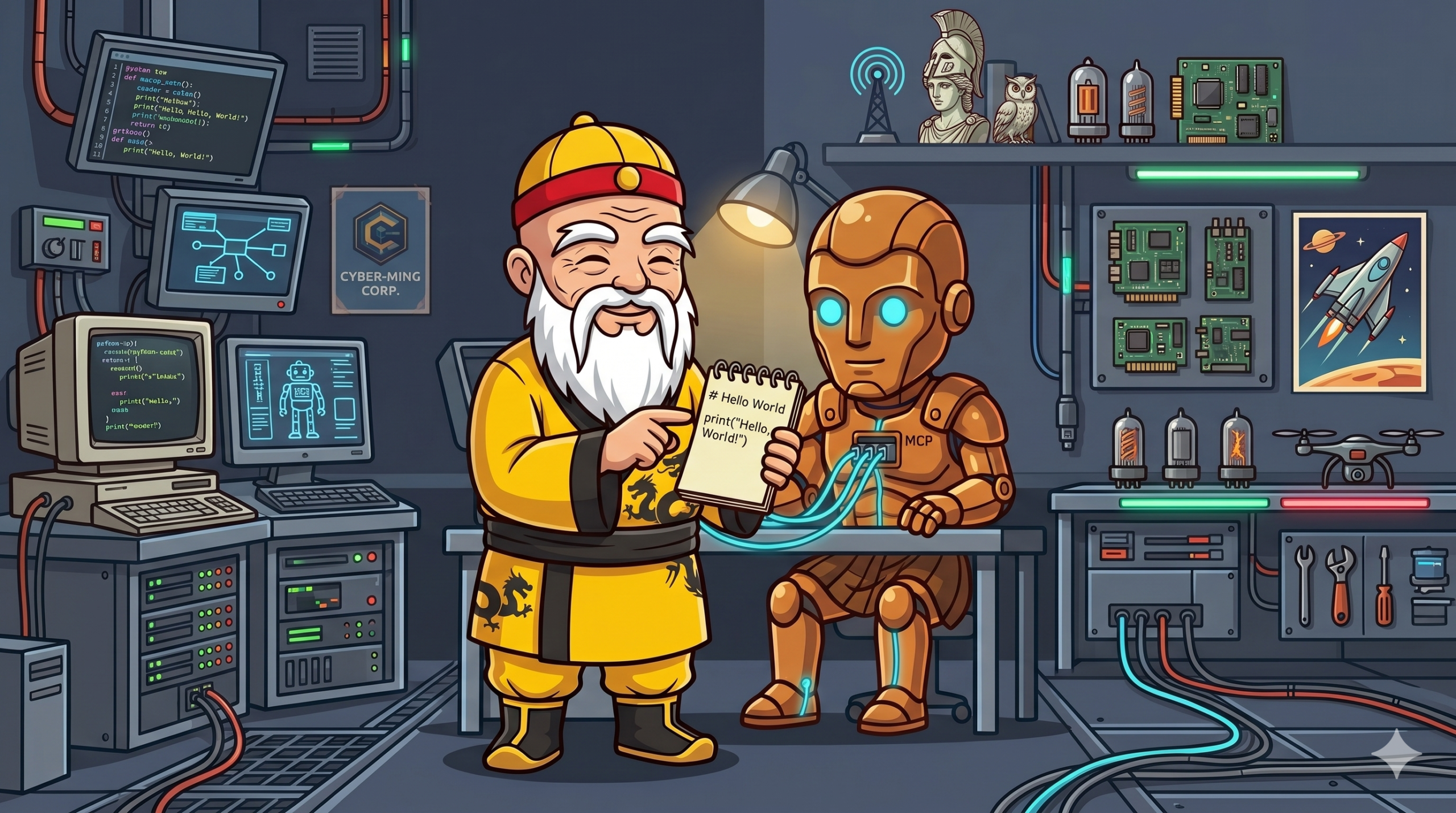
Let’s take a step back in time. It’s 2012: Italy’s Ministry of Education is about to publish, on its own website, an international research call about Tuscan pecorino cheese.
Someone is tasked with translating the call into English. A simple job, if you know the language and can use machine translation, a fairly advanced tool for the time. I hedge with a “probably” because whoever handled the translation clearly wasn’t fluent in English, given that they produced a rendering that went down in history: the Italian title of the call, “Dalla pecora al pecorino” (“From the sheep to pecorino”), became “From sheep to Doggy Style” in English. As Paolo Attivissimo documented, the case travelled across the continent before the Ministry issued its apologies.
Now back to the present: on 23 January, Mercy hit theatres: in a dystopian future where AI is so advanced it serves as judge, jury and executioner, a police detective has ninety minutes to convince it that he didn’t commit the murder he’s accused of. Practically the whole film revolves around how it was possible to fool the machine and frame an “innocent” man.
At first glance these are two wildly distant events: a machine translation gone X-rated and the tale of an infallible AI that, in the end, gets outwitted. Yet both put us in front of the complicated relationship between people, technology and (missing) competence. In other words, in every era the most advanced tools at our disposal have demanded two distinct skills: mastering the underlying technology and mastering the field where you apply it. When either is missing, disaster is served. There are countless cases where users instead trust blindly technologies they often understand only superficially, and end up causing epic-scale messes.
I hold that no new technology can replace competence in the field where you apply it; rather, it presupposes it.
With LLMs the concept is the same: AI has become a force multiplier: if you’re competent in the field where you use it, it will be your ideal ally; but if you don’t know the subject, brace yourself, because it will become the worst of enemies.
What it actually multiplies
“Force multiplier” is a military term for a factor that increases the effectiveness of a force without increasing its size. Think of the intelligence world. By now, our main problem is no longer collecting data but rather managing the sheer quantity of information at our disposal. GeoInt, OSInt, SigInt, “RumInt”: the flood of information arrives non-stop, at a speed no analyst will ever be able to handle within the required time. It’s a situation DefenseScoop describes well: too much data, too few analysts, and AI moving from a mere collector to a partner in the decision. This opens the door to the second problem: trust in whoever, or whatever, evaluates and validates the data.
Let me take my earlier thesis and expand it.
AI multiplies what you already are: if you know your field and know how to use the LLM you’re working with, you have a shot at becoming superhuman. If instead you have only a superficial grasp of one of those fields, the LLM will be incredibly creative at ruining your life.
Domain knowledge has to serve you on three fronts: knowing what to look for, holding a dialogue with the model at your disposal, and critically analysing whatever gets served to you on a silver platter.
The second skill
By now we know how the analyst’s job has changed: today it’s imperative that the domain expert also becomes expert in a second area: communicating clearly and making the best use of the LLMs at their disposal. This isn’t a theory pulled from thin air. In an MIT Sloan experiment on nearly 1,900 people, half of the improvement gained by switching to a more powerful model didn’t come from the model itself, but from the way users rewrote their prompts.
The best users? The ones who could express an idea in clear words. Keep this detail in mind, because it overturns the “I’m not technical” alibi.
Knowing how to use AI is a skill in its own right, one that must be acquired to avoid being swept away by the competition. FOR NOW, the difference is still made (still) by you, the one steering the LLMs’ work.
As mastering the use of LLMs spreads, a chasm opens between you and those who either can’t or stubbornly refuse to use them. UNESCO calls it the new digital divide: no longer between those who have internet access and those who don’t, but between those who can assert themselves with AI and those who are subjected to it.
This divide doesn’t only separate experts from laypeople. It also separates the domain experts who have acquired a new capability from those who, brilliant in their field, have stood still.
The risk, for you, is twofold. Either you stay on the wrong side of the divide, or you end up so far ahead that what you produce is no longer understandable to whoever has to evaluate it: the client, the newsroom, the jury.
A competence that no one around you understands is hard to spend and, even more, hard to defend. Which brings us back to the need to know how to present what you do in the right way.
The matter has to be tackled from another angle too, otherwise it’s just conspiracy-thinking. Not every study sides with the LLM fans. In a controlled METR test run in 2025 on experienced developers, those using AI took 19% longer, while being convinced, on top of that, that they had gone faster. The researchers themselves admit the situation now seems to have changed.
Where you’re weak
The beauty of the multiplier is that it helps you partly fill some of your gaps. Can’t program? With an LLM you can build a script that meets that specific need.
Your written English in emails is poor? Have it written or corrected with a dedicated tool.
Your technical report is full of typos and muddled passages? A review with an LLM is something no one would turn down.
An incompatibility between your new laptop’s drivers threatens to cost you hours hunting for a fix? Claude will probably hand you a solution within half an hour.
If you think about it, it’s the same principle behind the tools AI can now operate on its own: we let the machine shoulder much of the dirty work and keep our priority on the tasks that require reasoning and judgement. The boundary, for now, is sharp, which is also the best argument in favour of competence: AI extends you only as far as you’re able to control it.
The script you can’t read might end up in production with glaring flaws, or with code cloned from proprietary material.
The draft report you took verbatim from ChatGPT might have invented sources or off-the-mark conclusions that you push forward anyway, with your signature on top.
And here we reach the third thesis: the multiplier can’t replace your judgement; if anything, it demands twice as much of it as before.
We covered it at length in the post on the atrophy of critical thinking: the risk isn’t that AI gets it wrong, but that it gets it wrong so convincingly that you decide checking is pointless. The model’s answer, on its own, is not a source. It’s a hypothesis to verify, like the ones a human source you wouldn’t trust blindly would give you.
Defending it in public
Let’s go back to the film Mercy and flip it around.
If in fiction the AI is in the driver’s seat, in everyday reality it’s us who answer for whatever Claude or Gemini handed us.
An OSInt or Digital Forensics analysis will, sooner or later, have to be defended and argued before a client, a newsroom, in a courtroom.
Think of the technical consultant who has to walk through their report in court in a way that holds up under cross-examination.
This holds as much for the consultant as for other professionals. It’s worth reading the summary of the Mata v. Avianca case, in which two New York lawyers filed a brief full of rulings that ChatGPT had invented out of thin air, complete with citations and case numbers. When the opposing side pointed out that those precedents didn’t exist, instead of withdrawing them they produced “copies”, again generated by AI. (And no, it doesn’t only happen in Italy!)
Does AI really save you time?
The answer seems less rosy than people think. According to Harvard Business Review‘s analysis, AI appears to increase employees’ working hours as they, perhaps unwittingly, take on tasks beyond those assigned. Only a minority of workers reinvest the time saved into higher-value activities; the rest goes into extra work or into monitoring and cleaning up the output the models generate.
Translated for us: the multiplier can hand you extra hours across the week, but it’s always you who has to decide how to spend them.
Spend them to grow your own skills, for instance to study a new domain, practise, work out where you went wrong last time, or to relax.
AI for studying is a gift: it quizzes you, simulates a scenario, acts as your training ground. But learning with AI, with no one to answer to, is one thing. Working with AI, where you must deliver, is another matter entirely.
Far from Mercy
The AI-judge of Mercy might belong to a dystopian future we are, PERHAPS, still far from. On second thought, that reality is probably just around the corner.
Back to us: there’s one thing you can take home: whoever uses the model has already overtaken you. I’m not talking about those who just use it, but about those who use it best, with the competence to know where to dig and to defend what they pull out.
Staying on the old path, using the hard-and-pure methods of the past, out of laziness or pride, means getting steamrolled by people technically less competent than you, but who have learned to multiply their own force.
I’ll leave you with these thoughts: the next time a model serves you THE perfect answer, the one you wanted to hear, before you move on, ask yourself:
- Could you find it without the model?
- Could you explain it to someone who challenges it?
- And the time it saved you today: did you spend it on becoming better?
Shall we talk about it in the comments or in our Telegram group?
This article was translated with the help of an AI language model and may contain inaccuracies.
Leave a Reply